New York City’s claim to being the jazz capital of the world is not nostalgia — it’s a present-tense fact supported by the concentration of working jazz musicians who live in the city, the number of venues that present jazz nightly, and the culture of the music itself, which remains more alive in New York than anywhere else. The question for a visitor or even a longtime resident isn’t whether there’s good jazz to hear; it’s where, and whether the cover charge and drink minimum are worth the experience.
This guide covers the venues where the answer is yes — where the cover is justified by what you hear, the room adds something to the experience, and the programming is genuinely serious. It’s organized by neighborhood because the jazz scene in Manhattan is genuinely distributed across the borough, not concentrated in any single area.
Village Vanguard (West Village): The Standard
The Village Vanguard at 178 Seventh Avenue South is the most important jazz club in the world and has been since it opened in 1935. The room is a wedge-shaped basement with exposed pipes, bad sightlines from certain seats, and acoustics that are somehow perfect despite all of that. The programming is consistent: one act per week, two shows per night (Tuesday through Sunday), with Monday reserved for the Vanguard Jazz Orchestra’s standing residency that has run since 1966.
The cover charge (around $30-35 depending on the act) plus a two-drink minimum is the price of one of the most singular listening experiences available in New York. The room forces attention — it’s intimate enough that you can see the musicians’ hands and expressions, and the culture of the room demands that you listen rather than talk. If you go to one jazz venue in New York, go here.
Book tickets in advance through their website. Popular acts sell out. Arrive early enough to get the seat you want — the front sections fill first and are worth the effort.
Blue Note (Greenwich Village): World-Class Programming
Blue Note at 131 West 3rd Street presents more famous names than any other jazz club in New York — the programming spans jazz legends, major contemporary artists, and genre-crossover acts that use jazz as a foundation. The room holds about 200 people and is significantly more comfortable than the Vanguard, with good sightlines from most seats and a full dinner service.
The cover charge varies dramatically by act — $30 for a regular night, $75-125 for a major residency. The two-show format (8pm and 10:30pm) means you can choose between the more crowded early show and the later one that runs hotter as the night progresses. The late show is consistently the better musical experience.
Smalls Jazz Club (West Village): The Underground Option
Smalls at 183 West 10th Street is the Village Vanguard’s informal counterpart — a basement room that presents emerging and mid-career jazz musicians in an environment that feels closer to a jazz session than a concert. The cover is $25 and includes the late-night jam session that starts after 1am, when the scheduled acts end and the musicians who’ve been working elsewhere in the city come in to play.
The late-night jam at Smalls is one of the most authentic jazz experiences in New York — the musicians are serious, the audience is attentive, and the informal format produces playing that you won’t hear in a more polished concert setting. If you want to understand how jazz actually works as a living music, the Smalls jam session is the place to be.
The Django (Tribeca): The Room That Earns Its Atmosphere
The Django at 196 Varick Street in Tribeca is a jazz bar designed to look like a Parisian underground club — exposed brick, low lighting, a performance space that wraps around the musicians. It could easily be a theme-bar cliché, but the programming is serious enough that the atmosphere serves the music rather than substituting for it.
The cover runs $35-50 depending on the act, with dinner reservations recommended for the best seating. The cocktail program is genuinely good — one of the few jazz clubs in New York where the drinks are worth ordering for their own sake. The room fills up on weekends; book ahead.
Jazz at Lincoln Center’s Dizzy’s Club (Columbus Circle): Views and Serious Jazz
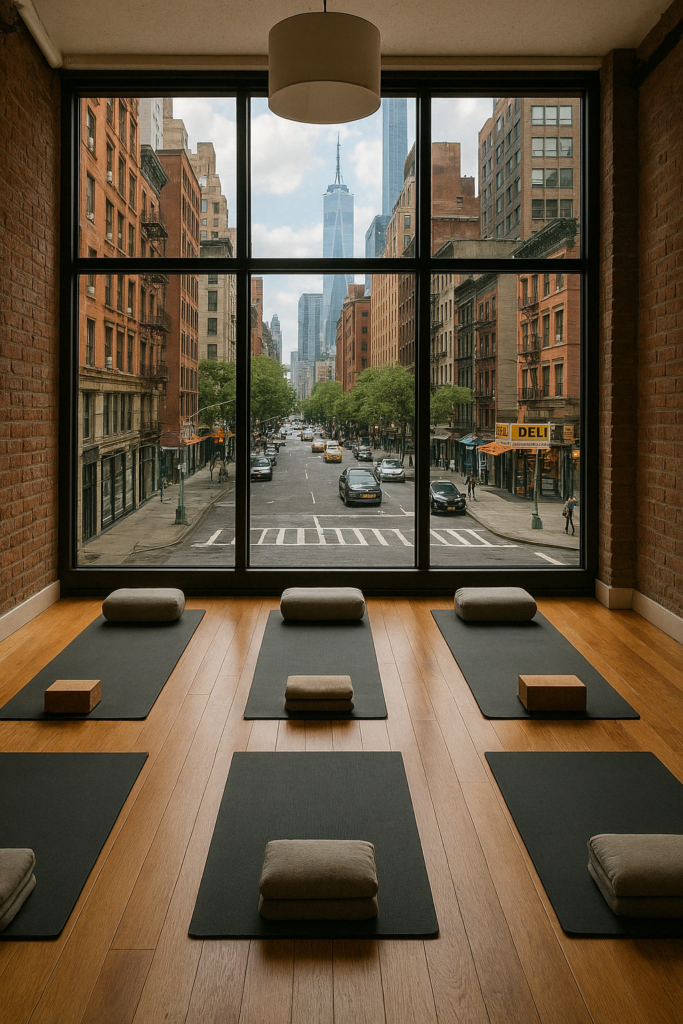
Dizzy’s Club Coca-Cola at the top of the Time Warner Center at Columbus Circle presents world-class jazz in a room with floor-to-ceiling windows overlooking Central Park and the Manhattan skyline. The visual experience is exceptional; the musical programming — booked by Jazz at Lincoln Center’s curatorial team — is consistently at the highest level.
Cover charges vary by act ($35-65 for most shows), and dinner service is available. The Sunday brunch with live jazz is one of the neighborhood’s best weekend experiences. The late-night sets on Friday and Saturday (around 11:30pm) are $20 and present younger musicians in a more informal format that’s worth catching if you’re already in the neighborhood.
Birdland (Midtown): History and Accessibility
Birdland at 315 West 44th Street is named for Charlie Parker and has been presenting jazz since 1949. The current location is a larger, more comfortable room than the original, with good sightlines and a full dinner service. The programming is mainstream by jazz standards — accessible to audiences who aren’t jazz specialists — and the Birdland Jazz Club Big Band plays every Monday night for a modest cover that’s one of the best jazz values in Manhattan.
Practical Notes
Jazz in New York operates on late hours — most shows start at 8pm and 10:30pm, with late-night jam sessions running until 3am or later at some venues. Dress codes are generally smart casual; the Village Vanguard and Blue Note don’t require formal dress but reward it. Drink minimums are standard at virtually every jazz club — budget $15-25 per drink per show in addition to the cover charge.
Frequently Asked Questions About Jazz Bars in Manhattan
What is the most famous jazz club in New York?
The Village Vanguard — open since 1935, it’s the most historically significant jazz venue in the world and still presents the best jazz programming in the city week after week.
How much does it cost to see jazz in Manhattan?
Cover charges range from $20 (late-night sets at smaller venues) to $125 (major residencies at Blue Note). The Smalls Jazz Club late-night jam session at $25 is the best value. Add a two-drink minimum of $15-25 per drink to the cover for total cost.
Do I need to book jazz club tickets in advance?
For the Village Vanguard and Blue Note, yes — especially for popular acts and weekend shows. Smalls and The Django are walk-in friendly on weeknights, with waits possible on weekends.
What time does jazz start in New York?
Most venues run two shows: 8pm and 10:30pm. Late-night jam sessions start after 1am at Smalls and a few other venues. Sunday matinees are available at several clubs.
Also see: Our harlem nightlife guide
Also see: Our les nightlife guide