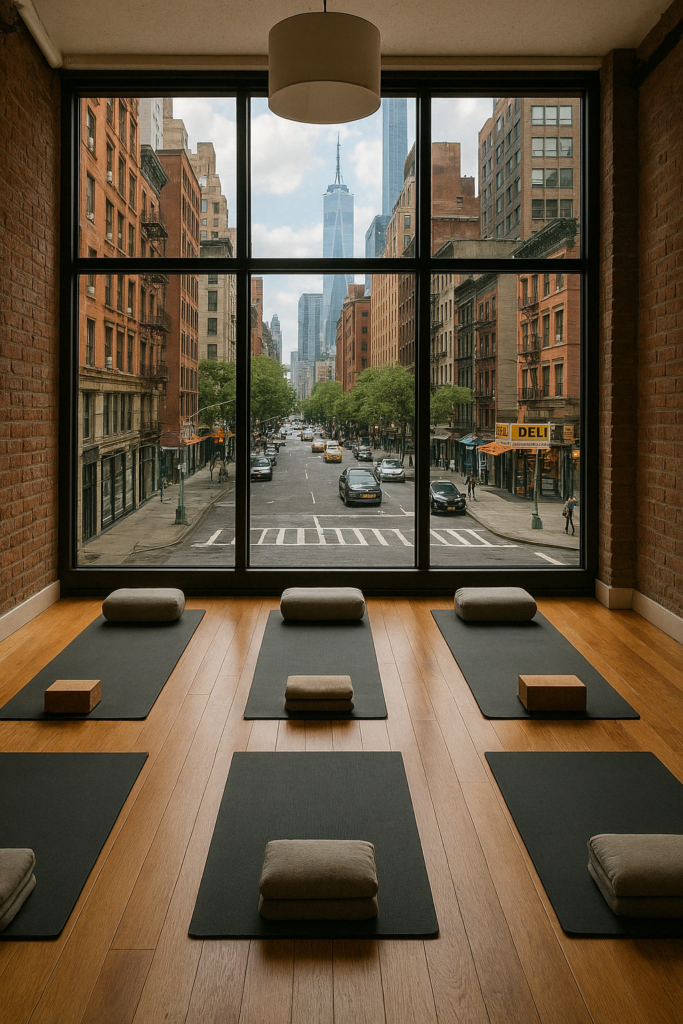
The first 18 hours decide what kind of trip you actually have. A pilgrim arriving in New York with a sharp plan for those first hours doesn’t just avoid the standard mistakes — they reset their nervous system into the rhythm of the city by the time the second morning starts. Tourists fight the city for three days before they finally relax. Pilgrims arrive already aligned. The difference isn’t experience or savvy. It’s sequencing.
This is the day-of-flight and first-day playbook. Not a packing list — a decision framework. You’re going to make about forty small choices between the moment you zip your suitcase and the moment you sit down to your first New York meal. Each one either saves you a small amount of friction or hands you a small amount of regret. Multiply by forty and you understand why some people spend Day 1 in a foul mood while others are already inside the city’s pulse.
The Morning of Departure: Three Decisions That Compound
Before you leave for the airport, three things matter more than anything in your bag. First: download the official MTA app and the OMNY companion before you leave home Wi-Fi. Pilgrims who do this on the AirTrain at JFK are already behind, because cellular service in transit hubs is unreliable and authenticated app downloads sometimes fail at the worst moment. Second: take a photo of your hotel address, including the cross streets, and pin it to your phone’s lock screen. New York taxi drivers expect cross streets, not numerical addresses, and reading “147 West 47th between 6th and 7th” off your screen is faster than spelling out a hotel name a driver doesn’t recognize. Third: eat a real meal before you leave home. Airport food is expensive and slow, plane food is sodium and sadness, and your first New York meal should not be a rushed slice while jet-lagged. Arrive in the city hungry but not starving.
The packing question that matters most for a pilgrim isn’t what you bring — it’s what you wear on the plane. New York requires walking. Average first-time visitor walks 14,000 to 18,000 steps on Day 1, often in shoes that were chosen for the photo and not the pavement. Wear your most broken-in walking shoes on the flight. If your shoes are the question, you have already lost.
Choosing Your Airport Arrival: JFK, LaGuardia, or Newark
If you booked your flight already, you don’t get to choose — but you should know what you booked into, because the three airports demand three different first-hour strategies.
JFK is in southeast Queens, about 16 miles from Midtown. Your two honest options are the AirTrain combined with the subway (E or A line), which runs roughly $11.15 total and takes about 60 to 75 minutes door-to-door, or a yellow taxi for a flat metered fare to Manhattan plus tolls and tip. The taxi is faster only outside rush hour. During the 4 to 7 PM weekday window, the AirTrain-to-subway combination often beats the taxi by twenty minutes because it bypasses the Van Wyck Expressway, which is one of the most reliably miserable roads in the United States. Rideshare adds a JFK pickup surcharge and is rarely cheaper than a taxi. The LIRR from Jamaica Station to Penn Station is the speed champion — about 35 minutes total — and is dramatically underused by visitors.
LaGuardia is closer to Manhattan but has no direct rail link, which means your options are bus, taxi, or rideshare. The Q70 SBS bus to the Jackson Heights / Roosevelt Avenue subway hub is free, runs frequently, and connects to the 7, E, F, M, and R lines. It’s the move if you have light luggage and don’t mind one transfer. Otherwise, taxi is fine and usually faster than rideshare.
Newark is in New Jersey, which is psychologically further away than the actual mileage suggests. The AirTrain Newark connects to NJ Transit or Amtrak at Newark Liberty Airport Station; NJ Transit to Penn Station New York is the standard pilgrim move and runs about 30 minutes once you’re on the train. Total cost is meaningfully higher than JFK transit but lower than a taxi, which can run substantially more than a JFK fare because it crosses a state line and a tunnel.
The OMNY Decision That Defines Your Week
Within your first hour in the city, you will tap to enter the subway. How you tap matters. OMNY is the contactless fare system that replaced the MetroCard, and it accepts a contactless credit card, a phone wallet, or a dedicated OMNY card. Here is the pilgrim move: use your phone wallet, not a physical card. Tap the same card or device every time. After 12 paid trips in a 7-day rolling window, OMNY caps your fares — the rest of the week is free. Switching between two cards or two devices breaks the cap and costs you money. Pick one, commit, tap.
If your phone is dying or you’re traveling with someone who doesn’t have a contactless card, an OMNY card costs a small amount at vending machines in subway stations and works the same way. Do not buy a 7-day unlimited unless you’re certain you’ll exceed the fare cap, because the cap usually wins.
Hotel Check-In: The Hour You Don’t Get Back
Standard hotel check-in in Manhattan is 3 PM. If you arrive before that, do not try to “drop bags” and rush back out — many hotels will hold luggage at the bell desk, but the line for that service at 11 AM on a Friday is its own ordeal. Better strategy: if you’re arriving before 1 PM, plan one stationary activity nearby. If you’re staying near Times Square, walk to Bryant Park and sit. If you’re in the Village, head to Washington Square. If you’re on the Upper West Side, walk into Central Park at 72nd Street. You’re not sightseeing yet — you’re letting the time pass while your body adjusts to the city’s tempo. This is the single most underrated move in pilgrim sequencing.
Once you’re in the room, the temptation is to nap. Resist. A 20-minute eyes-closed rest is medicine; a two-hour nap is poison. Jet lag from any direction is best fought by staying upright, drinking water, and getting outside light until a normal local bedtime. The pilgrim who naps until 6 PM is the pilgrim who wakes up at 3 AM hungry and angry.
The First Walk: Calibrating to the Grid
Before you do anything ticketed, do one calibration walk. Twenty to forty minutes, no destination, just enough to internalize how the grid works. Manhattan above 14th Street is mostly numbered: streets run east-west and increase as you go north; avenues run north-south and increase as you go west, with named exceptions like Broadway, Park, Madison, Lexington. Block lengths are not equal — a north-south “long block” between avenues is roughly three times the length of an east-west “short block” between streets. Twenty street-blocks equals about a mile. Once your feet understand this, you stop checking your phone for directions every two minutes, and that single shift is what separates someone who looks like a visitor from someone who looks like they belong.
Do this walk in the neighborhood you’re staying in, not in Times Square. The goal is to learn the streets you’ll need to know at midnight when you’re tired and trying to find your hotel. Note the closest subway entrance to your hotel, the closest 24-hour pharmacy, and one block where you saw multiple casual restaurants you’d actually eat at. That’s your home base data.
The First Meal: Protect This Decision
Your first New York meal sets a template your brain will use to evaluate everything for the next three days. Make it count, but don’t overreach. This is not the meal for the famous reservation you waited two months to get — that should be Day 2 or Day 3, after your palate and patience have recalibrated. Day 1 should be a meal that is unmistakably New York but logistically forgiving: a classic deli, a respected slice shop, a neighborhood Italian counter, a dim sum lunch in Chinatown if you arrived in the morning. Sit down if you can. Eat slowly. Tip in cash if the meal was under $30 and the room was crowded — it lands differently.
Skip Times Square restaurants on Day 1. Skip them every day, actually, but especially Day 1, when you don’t yet have the context to know why a $32 burger in a tourist corridor is a worse experience than a $14 burger four blocks east.
Evening Sequencing: Light, Movement, Bed
The pilgrim’s first evening should follow a specific arc: outside light until sunset, gentle movement after dinner, in bed by the local equivalent of 10 or 11 PM. If you’re flying east-to-west, you can stretch later; if west-to-east, go down earlier. The two mistakes that wreck Day 2 are both made on Day 1 evening: trying to “see something” when you’re already past your useful window, and ordering a second drink when the first one already hit harder than expected because you skipped a real lunch.
If you must do something ticketed on Day 1, make it observational, not participatory. The Empire State Building or Top of the Rock at sunset gives you the city’s geography in one visual download — you’ll spend the next four days recognizing neighborhoods you saw from above. A jazz set in the West Village works for the right pilgrim. A Broadway show on Day 1 is a coin flip; the energy expenditure is real and the chance you fall asleep in Act II is non-trivial.
The Subway Rules No One Tells You
Three things will save you on Day 1 transit. First: the train direction is “Uptown” or “Downtown” inside Manhattan, not north or south. Read the platform signs before you swipe — many stations have separate entrances for each direction, and re-entering can cost you another fare. Second: weekend service changes are real and frequent. The MTA app shows them in red; check before every weekend ride, not just the first. Third: when service is suspended on your line, the conductor’s announcement will tell you the alternate route, but the announcement is often inaudible. If you see locals suddenly file off and take the stairs, follow them. They know.
Stand to the right on escalators. Walk on the left. Don’t stop at the top of subway stairs. Don’t eat on the train. Don’t make eye contact with anyone performing in a subway car — engagement extends the show. These rules are not rude. They are how eight million people share infrastructure built for four million.
Money on Day 1: Three Small Surprises
Sales tax in New York City is roughly 8.875% and is not included in posted prices. The $14 menu burger is closer to $15.25 before tip. Tip in restaurants is 18 to 20% on the pre-tax total; doubling the tax is a fast approximation that lands close. Bartenders expect $1 to $2 per drink at a casual bar, more for cocktails. Cash is still useful for tips and small purchases at delis and bodegas, but no NYC business of any size requires it; the city banned cashless retail, but practically everyone takes cards or contactless. ATMs in delis charge fees that are sometimes obscene — use a bank ATM for the first withdrawal and you’ll save more than the cost of a slice.
The Day 2 Setup You Make Before Bed
Before sleep, do three things. Lay out tomorrow’s clothes including different shoes if your feet need a rotation. Charge everything, including a portable battery if you brought one — Day 2 will have less downtime than Day 1. Open the MTA app and pin the route from your hotel to wherever you’re going first; if there’s a service change, you’ll see it before you’re underground without signal. This twenty-minute ritual is the single highest-leverage thing you do on Day 1, because Day 2 is when the actual trip starts, and a Day 2 that begins fumbling with shoes and chargers loses an hour you cannot recover.
Frequently Asked Questions
Should I take a taxi or the subway from JFK on my first day?
If you arrive between 4 PM and 7 PM on a weekday, take the AirTrain to the E or A subway — traffic on the Van Wyck Expressway will make a taxi slower and more stressful than the train. At any other time, a yellow taxi is a reasonable choice for a first-time pilgrim with luggage. The LIRR from Jamaica Station to Penn Station is fastest of all if your hotel is in Midtown West.
What is OMNY and do I need a card?
OMNY is the contactless tap-to-pay system that replaced the MetroCard. You can use a contactless credit card, your phone wallet (Apple Pay, Google Pay), or a dedicated OMNY card. Use one method for the entire week to trigger the 7-day fare cap, which makes rides free after 12 paid trips in a rolling 7-day window.
Can I check into my hotel early on arrival day?
Standard Manhattan hotel check-in is 3 PM. Most hotels will store luggage at the bell desk before that, but you should plan a low-effort stationary activity nearby — a nearby park or coffee shop — rather than rushing to “see something” with bags in tow.
Is jet lag worse arriving in NYC from the West Coast or from Europe?
From Europe, you arrive in the morning facing a full day with a body that thinks it’s already evening. The pilgrim move is to stay upright in outside daylight until a normal local bedtime — no naps over 20 minutes. From the West Coast, you arrive with extra evening energy; the trap is staying out too late on Day 1 and burning Day 2.
What should my first New York meal be?
Something unmistakably New York but logistically forgiving — a classic deli, a respected slice shop, a neighborhood Italian counter, dim sum in Chinatown. Save the famous reservation for Day 2 or 3 once your palate and patience have adjusted. Avoid Times Square restaurants entirely.
How much cash should I bring for Day 1?
$60 to $100 in small bills is plenty. Use it for tips, bodega snacks, and the rare cash-only counter. Withdraw from a bank ATM, not a deli ATM, to avoid surcharge fees that can exceed $5 per withdrawal.
The 46-Day Capture
The 46-Day Pilgrim Capture
Most New York trips fade into a blur within six weeks. The pilgrim’s habit is the 46-day capture: forty-six days after you fly home, write down the three things you remember most vividly. Not the famous things — the actual ones. The block where you got lost. The deli with the cashier who recognized you on Day 3. The first time the subway map clicked. Capture the sensory memory while it’s still recoverable. This is how a trip becomes a permanent reference point instead of a slideshow.
[46-day capture form embedded here — readers receive a calendar reminder 46 days after their NYC trip with a single prompt: “What three things from your trip do you still remember?”]
The Pilgrim’s First-Day Discipline
Tourists treat Day 1 as the first day of the vacation. Pilgrims treat it as the calibration day — the day you spend earning the right to enjoy Days 2 through 7. Every choice on Day 1 is either a deposit into your future calm or a withdrawal from it. Walk the grid. Tap with one device. Eat where the line is local. Sleep on local time. The city will not adjust to you, but it will absolutely accept you the moment you stop fighting it. That handover usually happens around hour eighteen — the morning of Day 2, when you wake up and realize the streets outside already feel like geography you can read. That’s when the pilgrimage actually begins.