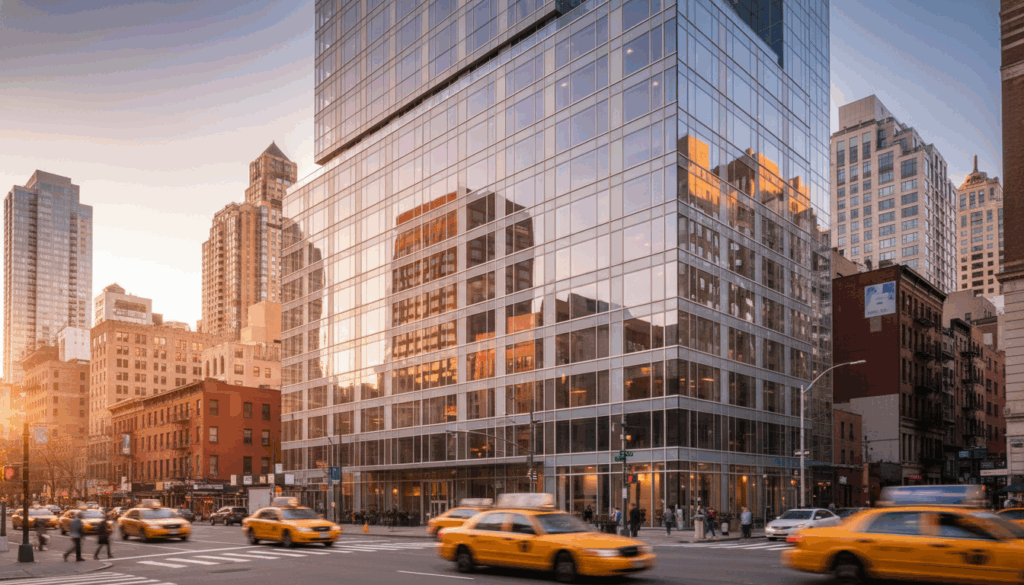
Midtown Manhattan is one of the most visited places on earth, and most people who visit it see almost nothing of the actual neighborhood immediately to its west. Hell’s Kitchen — bounded roughly by 34th Street to the south, 59th Street to the north, Eighth Avenue to the east, and the Hudson River to the west — is where the people who make the theater district work actually live, eat, and drink. It’s dense, affordable by Manhattan standards, and almost entirely off the tourist radar despite being a 10-minute walk from Times Square.
The name has a complicated history. The most cited origin story involves a 19th-century police officer who, looking at a particularly rough block near 39th Street and Tenth Avenue, said something to the effect that the neighborhood was “hell itself.” Another officer replied that it was “hell’s kitchen.” The name stuck, even as the neighborhood changed from a gang-controlled Irish enclave into one of the more livable corners of Manhattan. The city officially renamed it “Clinton” in the 1960s in an attempt to clean up the image, but almost no one uses that name.
Why Locals Live Here
Hell’s Kitchen has something increasingly rare in Manhattan: actual neighborhood density without the premium price that usually accompanies it. The housing stock is a mix of prewar walk-ups, mid-century apartment buildings, and newer construction along the far west blocks near the river. Rents are lower than comparable apartments in Chelsea or the Upper West Side, partly because Midtown’s commercial office district depresses residential desirability for people who don’t understand that you can walk away from an office district in three minutes.
The neighborhood also has one of the best independent restaurant concentrations in the borough. Ninth Avenue between 37th and 57th Streets is a continuous strip of small, owner-operated restaurants representing cuisines from almost everywhere — Colombian, Thai, Ethiopian, Greek, Mexican, Japanese, Peruvian, and about twenty other categories. It is not a polished restaurant row; it’s a working commercial strip where the value-to-quality ratio consistently outperforms almost any other stretch of comparable length in Manhattan.
Where to Eat: The Ninth Avenue Case
Meskerem on West 47th Street is one of the best Ethiopian restaurants in New York City. The injera is made fresh, the tibs are excellent, and the prices are what you’d pay in Astoria or Crown Heights, not what you’d expect four blocks from the theater district. Go with a group if you can.
Poseidon Bakery on Ninth Avenue at 44th Street has been making Greek pastries and fresh phyllo dough in the same location since 1923. It’s one of the few remaining family-operated Greek food businesses in Manhattan, and the spanakopita and baklava are worth stopping for even if you’re just passing through.
Danji on West 52nd Street is a Korean small-plates restaurant that has maintained a consistent level of quality for over a decade in a neighborhood that doesn’t make it easy. The kimchi fried rice and the bulgogi sliders are the anchors; everything else on the menu is worth exploring.
Don Antonio on West 50th Street makes Neapolitan pizza in a wood-burning oven. It’s crowded, the wait can be long, and it’s worth both. Order the montanara — the fried pizza — if you’ve never had it.
The Bar Scene Nobody Talks About
Hell’s Kitchen has a quietly excellent bar scene, concentrated mostly on Ninth Avenue and the cross streets between 44th and 52nd. The neighborhood has a large LGBTQ+ community, and many of the bars reflect that — friendly, unpretentious, and open late.
Industry Bar on West 52nd Street is the anchor of the neighborhood’s gay bar scene — a large, well-run space with a roof deck and regular DJ nights. Pint on West 45th Street is a smaller, quieter bar with good beer selection and no pretensions. Rudy’s Bar & Grill on Ninth Avenue has been operating since Prohibition and is famous for being extremely cheap and for giving away free hot dogs with every drink. It is not a refined experience. It is a very good bar.
Hell’s Kitchen and the Theater World
The neighborhood’s relationship with the theater district is intimate and mostly invisible to theatergoers. The people who build sets, run lights, sew costumes, and perform in Broadway productions tend to live in Hell’s Kitchen because it’s walkable to work and affordable relative to the surrounding neighborhoods. The stage door culture — actors coming out after shows, the specific energy of the blocks near the back entrances of the big theaters — is most accessible from the streets of Hell’s Kitchen.
Studio 54, now a Broadway theater at 254 West 54th Street, is the most famous address in the neighborhood’s recent history. The building operated as a nightclub from 1977 to 1980 and is now a legitimate Broadway house — a complete reversal of purpose that feels very New York.
The Hudson River Park Access Point
The western edge of Hell’s Kitchen runs along Hudson River Park, which most Midtown visitors never find. The park runs from 59th Street south to Battery Park City along the Manhattan waterfront, and the Hell’s Kitchen access points — particularly around Pier 84 at 44th Street — give you kayaking, running paths, and water views in a context that feels completely disconnected from the commercial city a few blocks east. Hudson River Community Sailing offers free sailing for New York City residents on weekday evenings; visitors can take introductory classes for a nominal fee.
Getting Around
The A/C/E trains run along Eighth Avenue, with stops at 42nd Street and 50th Street covering most of the neighborhood. The 1/2/3 trains on Seventh Avenue are one block east of the neighborhood’s eastern boundary. Ninth Avenue has a Select Bus Service route (M12) that’s faster than it looks. Walking from Times Square to almost anywhere in Hell’s Kitchen takes under 15 minutes.
Frequently Asked Questions About Hell’s Kitchen
Is Hell’s Kitchen a good neighborhood to stay in?
Yes, especially for theater and Midtown visitors. Hotels in Hell’s Kitchen tend to be cheaper than comparable properties in Times Square proper, and the neighborhood is walkable to everything Midtown offers while being quieter at night.
Why is it called Hell’s Kitchen?
The most cited origin traces to 19th-century police officers describing the neighborhood’s rough character. The name stuck through multiple waves of neighborhood transformation and is still used despite an official renaming to “Clinton” in the 1960s.
What’s the best restaurant on Ninth Avenue?
That depends entirely on what you want. For Ethiopian, Meskerem. For Greek pastry, Poseidon. For Neapolitan pizza, Don Antonio. The whole strip between 37th and 57th Streets is worth walking for options.
Is Hell’s Kitchen safe?
Yes. It’s one of the more heavily foot-trafficked neighborhoods in Manhattan given its proximity to Midtown, and it’s well-lit and active at night. Standard urban awareness applies.
What’s the difference between Hell’s Kitchen and Clinton?
They’re the same neighborhood. “Clinton” is the official city-designated name from the 1960s. Almost no one uses it. “Hell’s Kitchen” is what residents, restaurants, and everyone else calls it.
Also see: 40 free things to do in manhattan