New York City is the most written-about city on Earth and somehow still the most misunderstood by people who haven’t spent time in its actual neighborhoods. HelpNewYork covers the city from the ground up — the parks that locals use, the food halls that replaced the restaurants, the neighborhoods where things are actually happening, and the practical knowledge that doesn’t make it into tourist guides. This is the complete index of HelpNewYork’s NYC coverage.
Parks and Outdoor Spaces
New York’s parks are underestimated by visitors and overused by locals in the obvious ones — Central Park, Prospect Park — while dozens of genuinely exceptional spaces go mostly unnoticed. Pelham Bay Park in the Bronx is the largest park in the five boroughs — larger than Central Park by a significant margin — with hiking trails, a beach, and the kind of space that Manhattan’s parks can’t provide. The parks of Bayside, Queens including Little Bay Park give families in the outer boroughs access to waterfront green space that doesn’t require a subway transfer to get to.
Midtown Manhattan has hidden outdoor spaces that most office workers walk past every day. Greenacre Park’s hidden waterfall in Midtown Manhattan is a pocket park that somehow creates the sensation of being outside the city without leaving 51st Street. It is one of the more successful pieces of urban design in Manhattan and one of the least discovered by people who aren’t already looking for it.
Neighborhoods: The Real NYC
New York’s neighborhoods are the actual unit of city life — each one with its own economy, character, and set of institutions that have no equivalent anywhere else. HelpNewYork covers the neighborhoods that matter to people who actually live in or are moving to the city.
Brooklyn has become the dominant residential destination for New Yorkers priced out of Manhattan and for people moving to the city who want density without the full Manhattan intensity. HelpNewYork’s Brooklyn neighborhood guides cover: Williamsburg, Park Slope, DUMBO, Carroll Gardens and Cobble Hill, Crown Heights, Bushwick, Bay Ridge, Bed-Stuy, Red Hook, and Greenpoint.
The neighborhood safety question is the one people ask and then feel embarrassed about asking. Is Harlem safe in 2026 — including the meaningful distinction between Harlem and East Harlem that most guides elide — is the kind of honest, neighborhood-specific assessment that HelpNewYork provides instead of the generic “NYC is safer than it was” answer that answers nothing. The Manhattan safety guide by neighborhood covers this systematically across the borough.
Queens is the most ethnically diverse urban county in the United States, and its food reflects that in ways that are impossible to replicate anywhere else. The restaurants of Queens — a culinary journey across the boroughs — and specifically Filipino food in Woodside’s Little Manila cover the borough that most Manhattan-centric NYC guides miss entirely. Moving to Sunnyside, Queens in 2026 — rent, transit, and neighborhood character — is the kind of practical guide that actually helps people make decisions rather than just inspire them.
Food and Drink: Where New Yorkers Actually Eat
Food halls have replaced restaurants as the primary format for discovering new cuisines in New York — the economics of restaurant real estate have made them the most efficient way to run a food business in the five boroughs. NYC’s best food halls and indoor markets covers the format comprehensively — which halls are worth the trip, which are tourist traps, and what you should order when you get there.
The neighborhood-specific food coverage gets into the granular local knowledge that general restaurant guides don’t reach. The best pizza in Williamsburg, the best pizza in Brooklyn more broadly, and the cafes and coffee shops of Greenpoint and Williamsburg are the kinds of specific, local recommendations that come from spending time in neighborhoods rather than aggregating Yelp data.
Private dining rooms are the most underused resource in NYC for anyone planning a dinner that needs to feel considered. The best NYC restaurants with private dining rooms covers the options across price points and neighborhood — from the formal private room with a dedicated server to the semi-private space that gives the illusion of exclusivity without the full buyout. NYC wine bars for every budget covers the other end of the planning spectrum — the spontaneous evening that needs a good room and a good list without a reservation made six weeks in advance.
Restaurant etiquette is genuinely different in New York than anywhere else in the country. NYC restaurant etiquette — insider tips for dining like a local covers the unwritten rules that locals follow and visitors routinely violate, creating the friction that makes New Yorkers reluctant to recommend restaurants to out-of-towners.
Shopping: Beyond the Department Stores
New York’s shopping landscape is dominated by the obvious — Fifth Avenue, SoHo’s flagships, the department stores — but the more interesting shopping happens in the neighborhoods. The NYC flea markets and antiques markets guide for 2026 covers the weekend markets where the city’s collectors, dealers, and serious shoppers find what the retail stores don’t carry. SoHo boutiques and vintage finds and unique boutiques in Park Slope cover the neighborhood retail that gives New York its texture.
For visitors who want the luxury experience, SoHo’s designer flagship stores maps the concentration of international luxury retail that has made the neighborhood the American equivalent of Bond Street or Rue du Faubourg Saint-Honoré.
Wellness and Inner Life
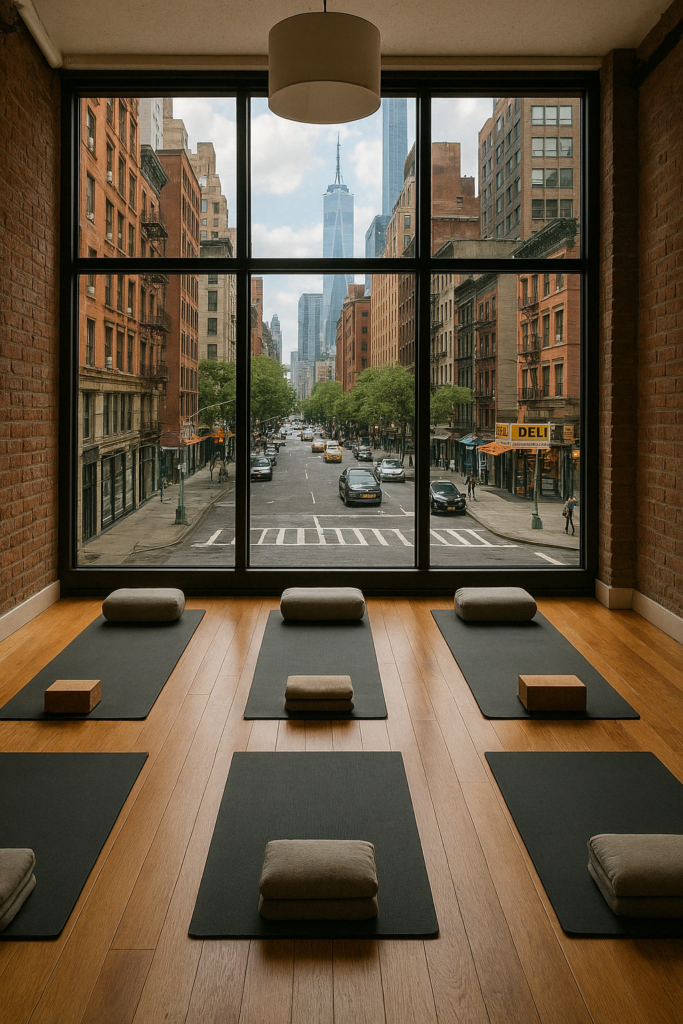
New York’s wellness scene is enormous and mostly invisible to anyone who doesn’t already know where to look. NYC’s top meditation centers and studios covers the options across traditions — secular mindfulness, Buddhist-rooted practice, and the hybrid formats that have become the city’s dominant wellness modality. Weekend meditation retreats near NYC covers the options for getting out of the city for a genuine reset without traveling more than two hours.
Getting Around: Transit Transitions
The MTA is mid-transition — the MetroCard is being phased out in favor of OMNY contactless payment, and the implications for regular riders are more significant than the MTA’s communications have conveyed. OMNY vs. MetroCard in 2026 — the complete transition guide covers what changes, what doesn’t, and what the tap-to-pay system means for the categories of riders — students, seniors, low-income riders — who depend on MetroCard discount programs that may or may not carry over. The NYC bike and micromobility update covers the Citi Bike expansion, the new e-bike rules, and what the city’s evolving two-wheel infrastructure means for daily commuters.
Events and Seasonal Coverage
New York’s event calendar is dense enough to need a guide of its own. The SantaCon NYC survival guide is the kind of event-specific coverage that separates useful local knowledge from generic city guides — the specific logistics, the bars to avoid, and the neighborhoods that get most affected by the annual chaos. NYC art gallery openings covers the cultural calendar for people who use the city’s gallery system as a free weekly activity rather than an occasional special occasion.
Practical New York
Living in New York requires navigating systems that the city doesn’t make self-explanatory. NYC 311 mastery in 2026 — how to actually resolve noise complaints, heat issues, and service failures quickly — is the kind of civic knowledge that makes the difference between a frustrating New York experience and a functional one. NYC good cause eviction law and the new tenant protections covers the housing legislation that affects anyone renting in the five boroughs and the rights that tenants now have that didn’t exist before.
The coworking question has become central to how people use New York. The best coworking spaces and laptop-friendly cafes in NYC covers the full range — day pass options, neighborhood-specific recommendations, and the practical considerations (noise level, power access, wifi reliability) that determine whether a coworking space actually works for focused work.
Frequently Asked Questions — NYC Local Guide
What neighborhoods does HelpNewYork cover most thoroughly?
HelpNewYork covers all five boroughs with particular depth in Brooklyn (ten neighborhood-specific guides), Manhattan (safety, dining, neighborhoods, transit), and Queens (food, neighborhoods, moving guides).
Is HelpNewYork useful for visitors or is it aimed at residents?
Both. The neighborhood guides, food coverage, and park content serve visitors who want local knowledge. The practical coverage — 311 guides, tenant rights, transit transitions, coworking — is aimed at residents and people considering a move to the city.
How current is HelpNewYork’s coverage?
HelpNewYork publishes regularly and updates time-sensitive content — event guides, restaurant openings, transit changes — as the city changes. The 2026 coverage reflects current conditions rather than pre-pandemic or immediately post-pandemic NYC.